Why Coating Matters More Than Compliance
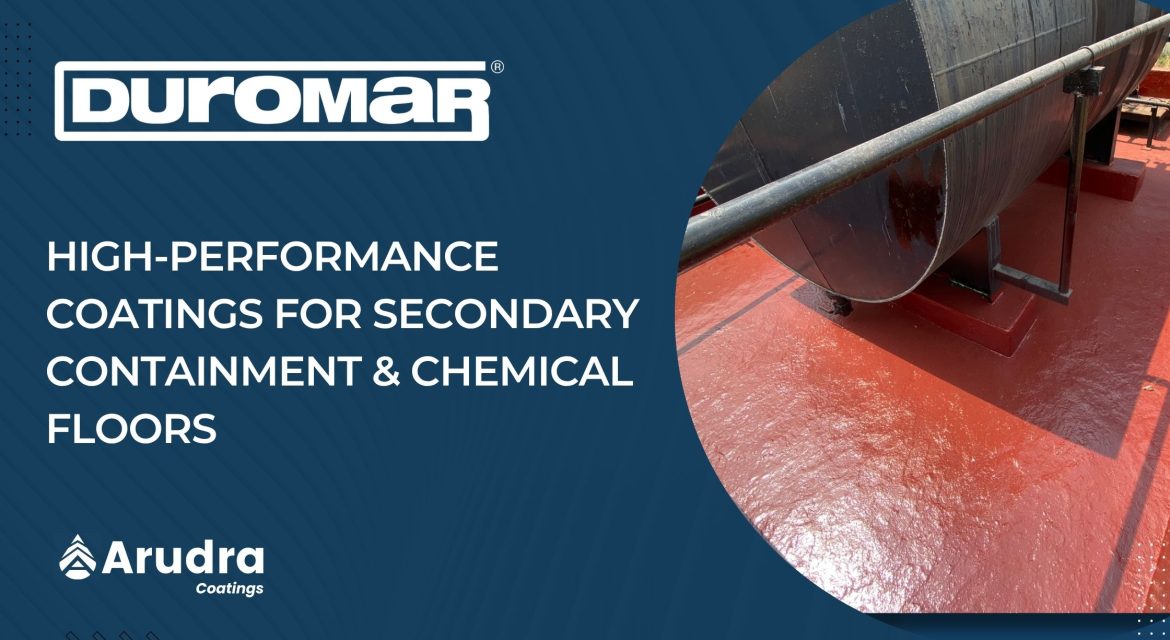
Regulatory compliance may be the primary driver for installing secondary containment systems—but true value lies in preventing environmental contamination and ensuring long-term asset protection.
In industries such as refineries, petrochemicals, and fertiliser plants, even minor chemical leaks can result in severe damage to concrete structures, groundwater contamination, and costly shutdowns. A properly engineered secondary containment coating system acts as the first line of defense, ensuring spills are contained, controlled, and safely managed.
The Challenge: Not All Chemical Environments Are the Same
Designing an effective containment zone is not as simple as applying a generic coating. Each installation presents unique technical challenges:
- Variable Chemical Exposure: Acids, alkalis, solvents, and hydrocarbons demand different resistance properties
- Concrete Substrate Integrity: Old or chemically attacked concrete requires repair and sealing before coating
- Joint & Crack Management: Expansion joints and cracks must be properly treated to prevent leakage pathways
- Thermal & Mechanical Stress: Floors must withstand temperature variations, impact, and operational loads
Failure to address these factors often leads to coating breakdown, chemical ingress, and eventual structural deterioration.
The Solution: Engineered Duromar® Flooring Systems
A robust solution involves the use of Duromar® 100% solids (zero-VOC) epoxy systems, specifically engineered for aggressive chemical environments. These systems are designed for:
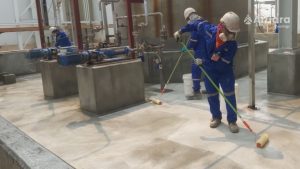
- Bund walls and containment pits
- Drip trays and process areas
- Chemical storage floors and loading zones
The coating system is selected based on a detailed chemical exposure matrix, ensuring compatibility with the stored or handled media.
A typical multilayer system includes:
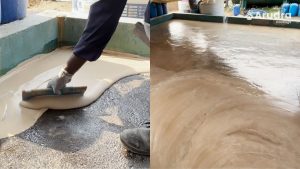
- Primer / Sealer (Duromar® DF-1301): A 100% solids, low-viscosity epoxy sealer designed to deeply penetrate and seal porous concrete substrates. It enhances adhesion of subsequent layers, prevents outgassing, and restores the surface’s mechanical integrity—ensuring a strong and reliable bond for the coating system.
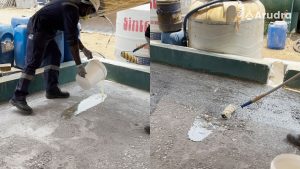
- Rebuild Layer (Duromar® DuroFil): A high-performance epoxy rebuild compound used to repair damaged, pitted, or chemically deteriorated concrete. It restores the original profile, fills voids and cracks, and provides a uniform, structurally sound surface for further coating application.
- Novolac Topcoat (Duromar® DF-4301): A 100% solids novolac epoxy coating engineered for superior resistance against aggressive chemicals, including acids, alkalis, and solvents. It forms a dense, impermeable barrier that delivers long-term protection, durability, and performance in harsh chemical exposure environments.
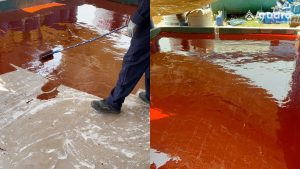
This engineered approach ensures a durable and reliable containment barrier.
Why It Works: Performance That Goes Beyond Protection
Duromar® flooring systems are designed to deliver superior performance in demanding environments:
- Seamless & Pinhole-Free Application: Eliminates leakage paths and ensures complete containment
- Excellent Adhesion: Strong bonding to concrete prevents delamination
- High Chemical Resistance: Withstands aggressive acids, alkalis, and solvents
- UV Stability: Suitable for both indoor and outdoor containment zones
- Slip-Resistant Options: Enhances safety in operational areas
The result is a dense, impermeable barrier that prevents chemical penetration and extends the life of the structure.
Proven Across Critical Industrie
These systems have been successfully applied across:
- Refineries handling aggressive hydrocarbons and chemicals
- Chemical processing plants with mixed exposure environments
- Fertiliser complexes dealing with corrosive media
In each case, engineered coating systems have helped reduce maintenance frequency, improve safety, and ensure regulatory compliance.
Conclusion: Invest in Protection That Lasts
A containment system is only as reliable as the coating that protects it. Investing in a high-performance industrial floor coating not only ensures compliance but also safeguards assets, people, and the environment.